Kvadrat — Sample-to-bulk handoffs
Selection support keeps an upholstery or curtain brief attached to the cutting that will be reviewed, then to the quantity and destination you want discussed.
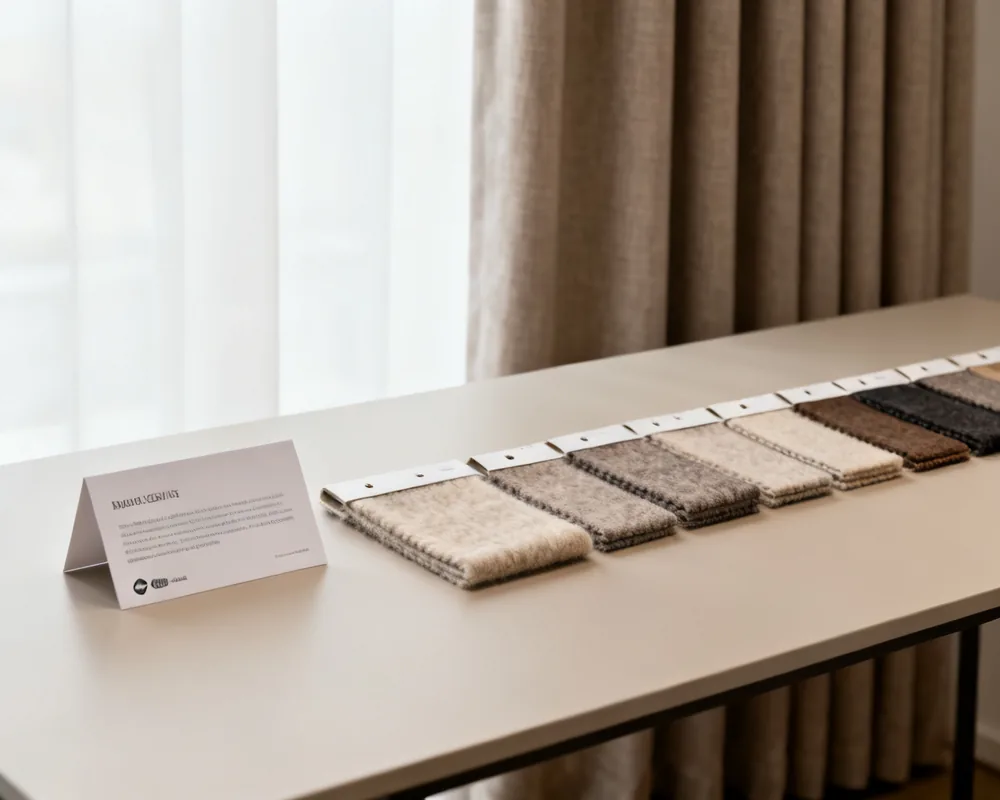
- Brief
- Sample
- Approval
- Order context
Selection support keeps an upholstery or curtain brief attached to the cutting that will be reviewed, then to the quantity and destination you want discussed.
Write the room first. A lounge seat, a task chair cover, and a floor-to-ceiling curtain do not share the same first question even when the colour family looks related. Record fibre content if you have it, then the weave or knit, the target GSM with its unit, and the usable width after selvedge. If the cloth is a wool interior textile or a metallised window cloth, say which face will be seen and which side meets the lining or the foam.
A collection name can help locate a conversation. It does not replace the physical description, and it does not publish a price. Leave unknown GSM or width blank rather than guessing a number that later gets treated as agreed.
Place the submitted cutting next to the brief and look for the difference you actually asked about. Handle, thickness, and surface nap change how seating feels under a hand and how a curtain falls. Shade should be read as a lot, not as a screen colour. Note whether the cutting is unfinished, piece-dyed, or already carrying a surface treatment.
If a report is attached, keep the method and the specimen state beside the figure. Abrasion cycles, pilling notes, and dimensional change after a stated care cycle are separate lines. Do not fold them into one durability score.
Approval is a record of which cutting, which shade, and which finish were accepted for the next discussion. Store that reference with the date and the lighting or viewing condition you used. A later roll should be compared with that record, not with a memory of a photograph.
Open questions stay visible: a width that still needs confirmation, a cleaning method the facility has not named, or a metallised face whose durability context is missing. Closing those gaps is part of the handoff, not a side comment.
Quantity and destination describe the order conversation. They do not, by themselves, confirm that a cutting is available or that a date can be met. State the destination so shipping and any document scope can be discussed in the same thread as the cloth. If several shades are still live, list them instead of averaging them into one request.
When the brief, the approved cutting, and the order context disagree, stop and name the disagreement. That pause is the useful output of selection support on this site.
Send the cutting reference together with the room and the quantity you want discussed.